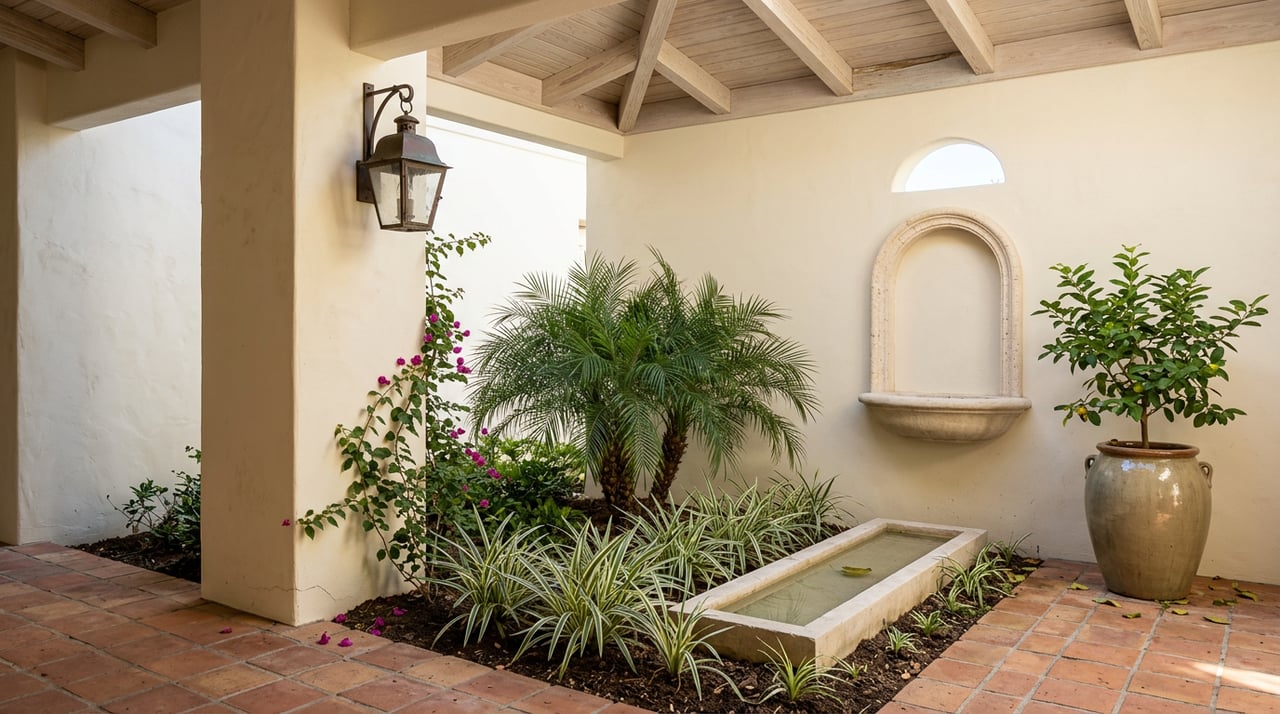
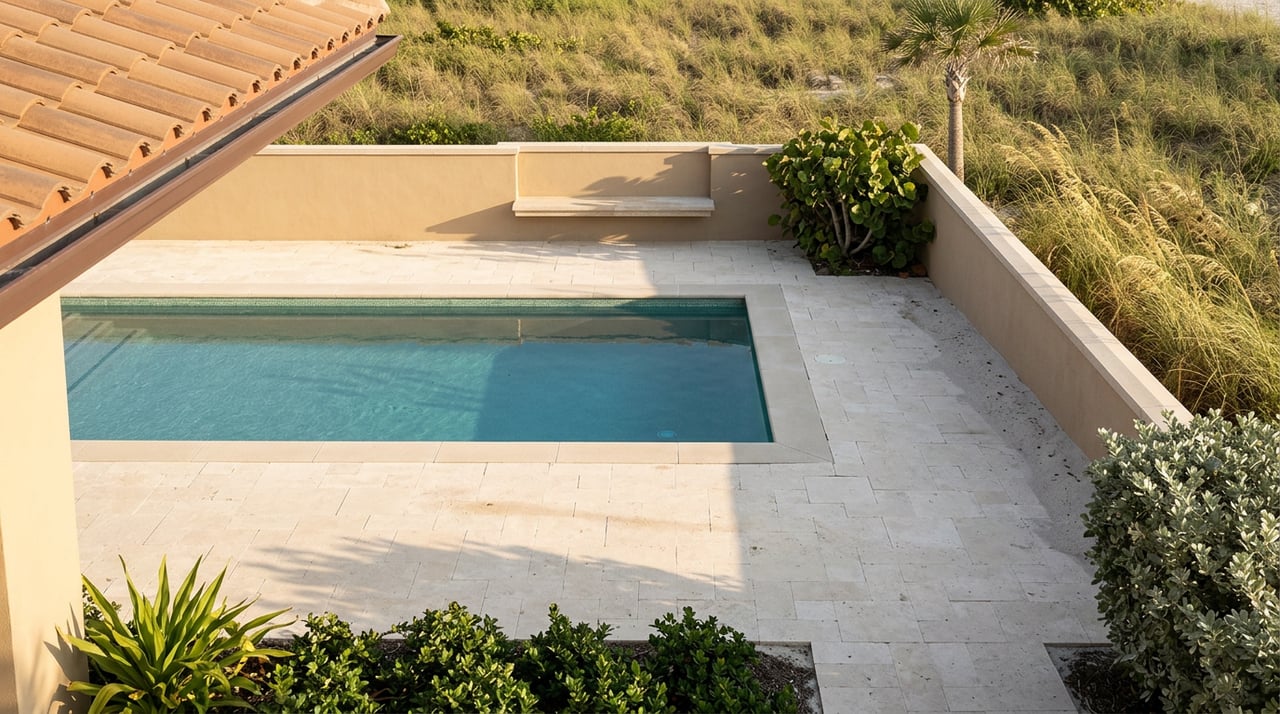
Walk the beach behind any oceanfront house on Hillsboro Beach after dark this month and you'll notice what's missing: porch lights aimed at the sand, pool lights left uncovered, string lights left up past dusk. That absence isn't an accident or a power outage. It's a town ordinance that's been on the books since September 2007, and as of this week it's still being checked. Sea turtle nesting season runs March 1 through October 31, and the town's own guidance is blunt about what that means for anyone with a view of the Atlantic: exterior lights have to be positioned so the point source of light is not directly visible from the beach. Nighttime inspections happen periodically through the end of October to confirm compliance.
Now walk that same stretch at 7 a.m. and you'll hear something that wasn't legal here two months ago. A gas-powered leaf blower, running exactly when it wants to, because the town that spent nearly two decades enforcing dark beaches lost the authority to enforce quiet mornings on July 1.
Those two facts sitting next to each other are the real story of Hillsboro Beach in 2026. This is a town about three miles long and, at its widest point, only around 900 feet across, and this year it found out, in the space of a few months, exactly how much of its own daily rhythm it actually gets to decide.
A Town That Enforces the Dark and Just Lost the Quiet
Hillsboro Beach was incorporated as a municipality in 1939, sat dormant for almost a decade, and only became active in 1947 under a special act of the Florida Legislature. It has run its own town hall since 1955, and the turtle lighting rule it enforces out of that building has real teeth: a $500 fine, or up to 90 days, for lights that illuminate the beach during nesting season. The town's lighting page still spells out the mechanism plainly, down to the requirement that fixtures in the line of sight of the beach use full cutoff shielding.
That rule survives because it's backed by state and federal sea turtle protections that predate the town's own ordinance and give local governments cover to enforce it aggressively. Noise never had that kind of backing. Florida's Senate Bill 290, the so-called Farm Bill, took effect on July 1 and preempts any local government from restricting or prohibiting gas-powered landscape equipment, leaf blowers included. The town flagged the change itself, telling residents plainly that it would no longer be able to enforce its own restrictions on the equipment. A rule that had shaped how landscaping crews worked on a barrier island for years was gone the moment Tallahassee decided it should be.
The contrast matters because it shows something residents rarely think about until it changes: the quiet and the dark that make this stretch of coastline feel the way it does aren't both protected by the same kind of authority. One rests on a state and federal wildlife framework the town gets to enforce with real penalties. The other rested entirely on the town's own ordinance power, and that power evaporated with one legislative session.
The Same Half Mile, Two Opposite Balance Sheets
Drive south along Hillsboro Mile past the lighthouse and you'll pass two properties that tell the other half of this story, the part that has nothing to do with turtles or leaf blowers and everything to do with capital that doesn't ask the town's permission for much of anything.
At 1159 Hillsboro Mile sits an 81-key resort built in 2021 by BH3 Management's Daniel Lebensohn and Gregory Freedman, once operated by the now-collapsed short-term rental company Sonder. In February, an entity of Emerald Creek Capital filed a $26 million foreclosure suit against the ownership group. According to The Real Deal's reporting, the lender had originally loaned $26 million against the property in 2022, the owners allegedly stopped paying real estate taxes and defaulted back in March 2024, and Emerald Creek ended up covering $731,000 and then another $2.19 million in taxes just to keep the property current while the loan sat unpaid past its maturity date.
A few hundred yards away, on 12 acres between the Intracoastal Waterway and the Atlantic, Related Group and Dezer Development topped off Rosewood Residences Hillsboro Beach in February. The 92-unit project, reported by South Florida Agent Magazine, will offer residences ranging from 2,800 to 6,400 square feet with curving terraces and floor-to-ceiling windows, pricing starting at $5.95 million, a private marina with 14 slips, and both an oceanfront and a sunset pool. Completion is set for early 2027. Dezer Development's president called it one of the most active development periods to date for this stretch of coastline, and on paper, driving past both sites in the same afternoon, it's hard to argue.
That's the part worth sitting with. One property on the Mile is being unwound through a foreclosure filing over unpaid taxes on a five-year-old resort. Another, a few hundred yards south, is pulling in eight-figure pricing before its first closing. Neither outcome had anything to do with a town ordinance, a zoning hearing, or anything Hillsboro Beach's roughly 2,000 residents voted on. It's capital moving at a scale the town can watch but not steer.
What's Still Worth Waiting For
Not everything on this stretch of coast is being decided somewhere else. The Hillsboro Inlet Lighthouse, first lit in 1907, still runs on the same volunteer-driven schedule it has for years: one boat tour a month, open only to members of the Hillsboro Lighthouse Preservation Society, departing from SFL Dive Headquarters on North Riverside Drive in Pompano Beach for the roughly two-mile trip up the Intracoastal. Climbing it means 175 steps up a spiral staircase, closed-toe shoes required, with preservation society volunteers on hand at the top to walk visitors through the lighthouse's history.
The lighthouse has one more piece of local history worth knowing if you've ever wondered about Cap's Place, the weathered waterfront restaurant just up the inlet in Lighthouse Point. During Prohibition, the brother of lighthouse keeper Thomas Knight built a rum-running speakeasy on a nearby island called Club Unique. It eventually became Cap's Place, and it's still operating in the same shack-like buildings today, a rare thread connecting the working lighthouse to a restaurant most people drive past without knowing the two share a history.
None of that runs on a state law or a foreclosure timeline. It runs on the same small, deliberate pace it always has, which might be the most honest thing to say about Hillsboro Beach this year. The town still controls the parts of daily life that were never really about scale, the lighthouse tour, the shape of the ordinance it fought hard to write in 2007. What it lost this year, and what it never had a say in to begin with, are the parts that were always going to be decided somewhere bigger: Tallahassee for the leaf blowers, and South Florida's capital markets for everything happening at street level on the Mile.
If you're trying to make sense of what any of this means for a specific property on Hillsboro Beach, whether it's a turtle lighting retrofit ahead of next season or a read on how the Rosewood project might shift values along the Mile, The Gobin Group has spent decades watching this particular stretch of Broward coastline up close. Get a Home Valuation if you want a grounded read on where your property stands against everything moving around it.